

I. Daily Maintenance: Lay a Solid Foundation to Prevent Hidden Risks
Daily maintenance must adhere to the principles of "regularity, comprehensiveness, and meticulousness". It is recommended to establish a 《Construction Hoist Daily Maintenance Record Form》 to clarify responsible persons and inspection frequencies, with a focus on the following aspects:
1. Inspection of Mechanical Components
Guide Rail Frames and Wall-Attached Frames: Check weekly for loose connecting bolts and cracked welds. If rust is found, remove it promptly and apply anti-rust paint to prevent structural deformation that could affect stability.
Transmission System: Inspect the meshing of gears and racks daily to ensure no severe tooth wear (replace if wear exceeds 15% of the original tooth thickness). At the same time, replenish with special lubricating oil to reduce mechanical friction.
Brakes and Safety Clamps: Test braking performance daily to ensure the construction hoist brakes smoothly after power failure. Maintain a safety clamp gap of 0.5-1mm to avoid brake failure caused by excessive gaps.
2. Maintenance of Electrical Systems
Control Circuits and Terminal Blocks: Check monthly for damaged wire insulation and secure terminal connections to prevent malfunctions caused by short circuits or poor contact.
Limit Switches and Sensors: Test the sensitivity of upper/lower limit switches and emergency stop buttons daily to ensure the equipment automatically cuts off power when reaching extreme positions—this is the "last line of defense" for safety.
3. Maintenance of Hydraulic Systems (for Hydraulic Construction Hoists)
Hydraulic Oil: Check oil level and quality every 3 months. Maintain the oil level between the tank’s marked lines; replace the oil promptly if it becomes turbid or contains impurities. Clean the hydraulic filter element simultaneously to prevent insufficient pressure due to blockages.

II. Regular Repair: Accurate "Diagnosis" to Eliminate Hidden Risks in Time
In addition to daily maintenance, develop a "quarterly and annual repair plan" based on equipment usage intensity and operating hours, focusing on in-depth overhauls of high-wear components and core systems of construction hoists:
1. Quarterly Repairs: Focus on inspecting steel wire ropes (replace if the number of broken wires exceeds 6 per lay length) and guide wheel bearings (replace promptly if abnormal noise or jamming occurs). Calibrate the construction hoist’s levelness to ensure no obvious shaking during operation.
2. Annual Repairs: Entrust professional teams to conduct a comprehensive "inspection" of the construction hoist, including structural stress testing, insulation resistance testing of electrical systems, and pressure adjustment of hydraulic systems. Replace aging components (such as seals and contactors) based on inspection reports to ensure the equipment complies with the national standard GB/T 10054-2021 《Construction Elevators》(note: the national standard retains the term "Construction Elevators" as the official name, consistent with industry norms).
III. Repair Taboos: Avoid "Missteps" to Prevent Secondary Damage
Strictly follow safety regulations during construction hoist repairs and eliminate the following incorrect operations:
1. Prohibit "Operation with Faults": If issues such as abnormal construction hoist noise, delayed braking, or shaking during operation are found, stop the equipment immediately for inspection. Never allow "faulty operation" to meet construction deadlines.
2. Prohibit Use of Non-OEM Spare Parts: Core construction hoist components (such as brakes and sensors) must be original or meet industry standards. Non-standard parts may have problems such as mismatched sizes or substandard materials, which pose safety hazards.
3. Prohibit No Debugging After Repairs: After repairs, conduct no-load test runs (no less than 3 lifting cycles). Only put the construction hoist into actual operation after confirming all functions are normal.
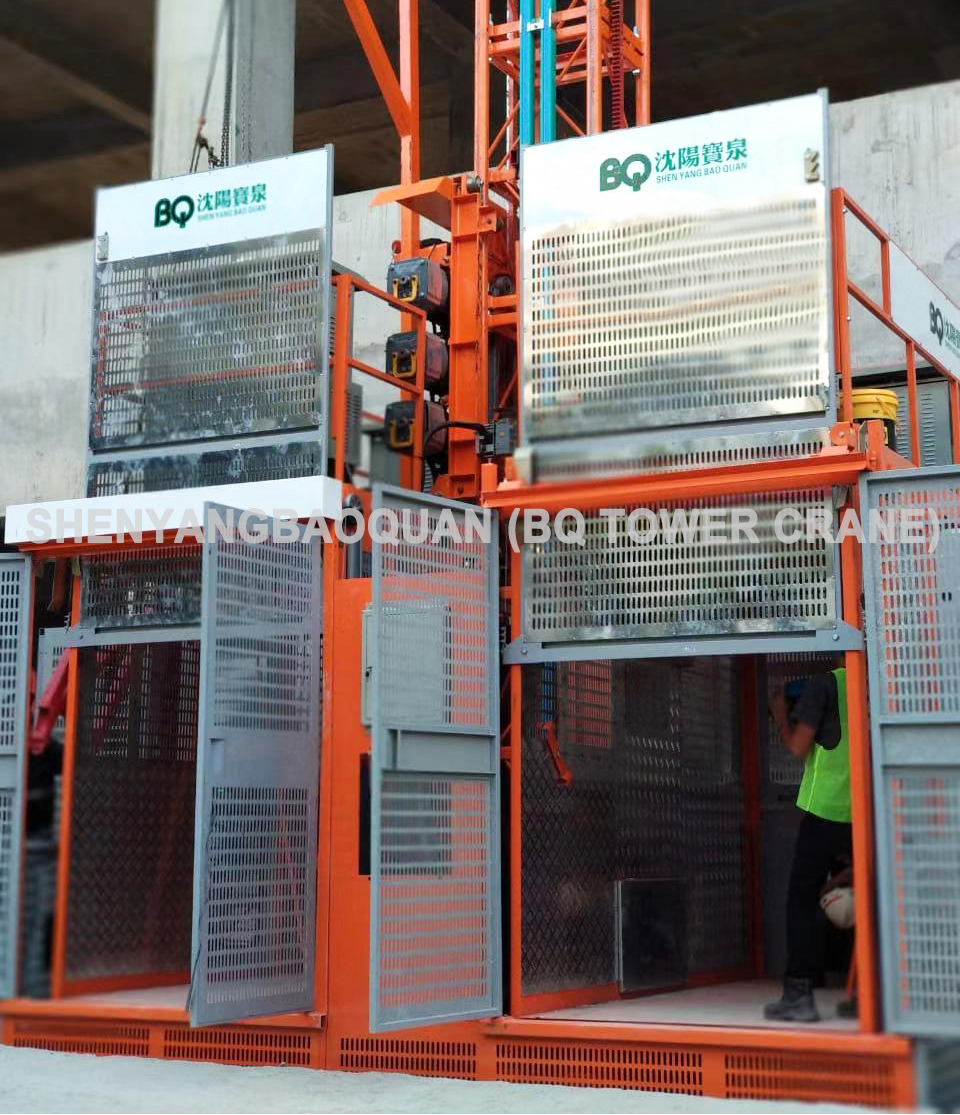
Construction hoist maintenance and repair is a process where "prevention is better than cure". As an enterprise with a complete after-sales service system, Shenyang Baoquan not only provides customers with high-quality construction hoist products, but also offers supporting professional maintenance and repair services, and can customize exclusive 《Construction Hoist Maintenance Plans》 for customers. Shenyang Baoquan is willing to use professional technology and thoughtful service to work with every customer to safeguard equipment safety, improve operational efficiency, and provide solid support for the smooth progress of construction projects!
